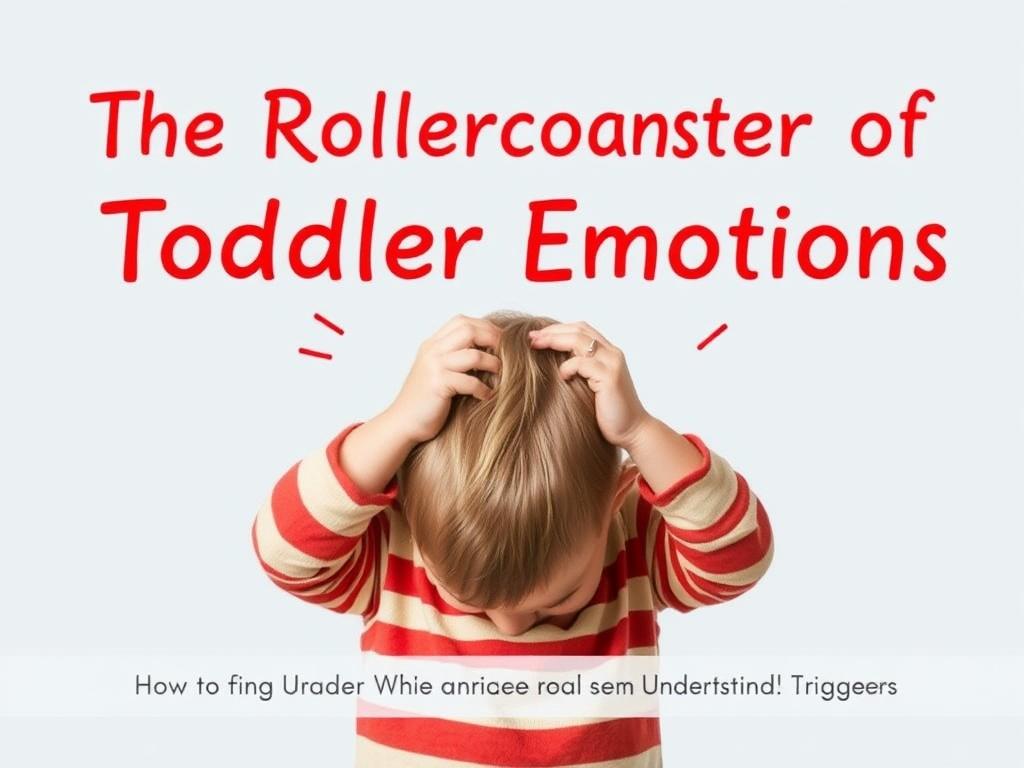
The Rollercoaster of Toddler Emotions
Toddlers are tiny humans with enormous feelings. One minute they’re giggling uncontrollably while chasing a sunbeam, and the next they’re wailing as if their world has ended because a cup was taken away. If you are living with, working with, or caring for a toddler, you know that this emotional ups-and-downs feels like living on a rollercoaster—with exciting highs, scary drops, and lots of unexpected turns. The good news is that this ride is normal, and with a few tools and a clear mindset, you can make the journey smoother for both you and the child you love.
In this article I want to walk you through what’s happening under the surface when toddlers act out, offer practical strategies you can use right away, and share ways to build the skills that help children manage emotions over time. I’ll include simple scripts, activity ideas, and a quick reference table you can come back to when things get hectic. You won’t get every answer in one read, but you will get a better map of the rollercoaster and how to ride it with patience and confidence.
Why toddler emotions feel like a rollercoaster
Toddlers are at a unique stage of development. Their brains are growing rapidly, but the parts that help with self-control and reasoning—the prefrontal cortex—are not mature yet. That means they feel emotions very intensely but don’t have the tools to manage them. Add to that a growing desire for independence, limited language to express needs or frustrations, and changing daily routines, and you have a perfect storm for dramatic emotional displays.
Physiological factors also play a role. Lack of sleep, hunger, illness, or sensory overload can flip a calm child into a meltdown. Small changes, like a new caregiver or a different nap schedule, can feel enormous to a toddler whose world depends on predictability. Understanding that their behavior is often driven by biology and development—not willful misbehavior—can change how you respond and reduce the frustration you might feel as a parent or caregiver.
Brain development and emotional regulation
Toddlers’ emotional centers (the amygdala) are highly reactive. This means fear, excitement, anger, and sadness can be felt strongly. The circuits that regulate those feelings are still forming, so the child relies on adults to help soothe and regulate. This is normal and necessary: responsive caregiving literally sculpts the brain, helping a child build the neural pathways needed for self-regulation later on.
When you respond calmly and consistently, you’re not rewarding them for acting out—you’re teaching them how to calm down. Over time, those repeated experiences build the child’s internal capacity to manage big feelings.
Language and independence
One key reason for emotional outbursts is limited language. A toddler who can’t ask for “more juice,” “a hug,” or “my toy” will often use emotion and behavior to communicate needs. Another frequent trigger is the drive for independence. “Me do it!” is a common toddler refrain, and when that autonomy is thwarted, frustration follows. Helping the child name their feelings and offering choices empowers them to move from outburst to cooperation.
Common emotional behaviors in toddlers

Not all tantrums are the same. Understanding the different types of emotional behaviors helps you choose the most effective response. Below is a helpful list with short explanations.
- Tantrums: Intense cries, sometimes with kicking or hitting, usually short-lived and goal-oriented (wanting an object, not wanting to stop an activity).
- Separation anxiety: Crying and clinging when a parent leaves, common around 8–18 months, sometimes recurring in toddlerhood.
- Clinginess: Persistent demand for attention and proximity, often triggered by changes like a new sibling or environment.
- Jealousy: Pushes, grabs, or negative behaviors when attention shifts to another child or person.
- Regression: Returning to earlier behaviors—like thumb-sucking or bedwetting—during stress or change.
- Mood swings: Rapid shifts between happy and upset with little apparent cause, often influenced by sleep, hunger, or sensory factors.
- Testing limits: Deliberate defiance or ignoring instructions as a way to explore boundaries and autonomy.
A table: Emotion, Likely Triggers, and Helpful Adult Response
| Emotion/Behavior | Likely Triggers | Helpful Adult Response |
|---|---|---|
| Tantrum | Frustration, denied desire, tired/hungry | Stay calm, keep child safe, use brief comforting words, wait it out, offer alternatives later |
| Separation anxiety | Caregiver leaving; new environment | Practice short, predictable goodbyes; reassure briefly; be consistent |
| Clinginess | Transitions, new sibling, illness | Offer brief extra comfort, then gentle encouragement to explore |
| Jealousy | Attention shifts, new baby/sibling | Spend one-on-one time; validate feelings; involve toddler in caregiving |
| Regression | Stress, sleep disruption, illness | Provide reassurance, minimize pressure, keep routines stable |
| Testing limits | Desire for independence | Offer choices, consistent limits, praise for cooperation |
How to read cues and understand triggers
The better you get at spotting the early cues, the easier it is to prevent big meltdowns. Toddlers often give small signs before a full-blown reaction:
- Body language: Stiffening, turning away, rubbing eyes, or clutching an object.
- Sounds: Rising pitch in their voice, whining, or repetitive questions.
- Behavioral changes: Refusal to engage, sudden clinginess, or increased activity and restlessness.
Watching patterns helps. Keep a simple mental or written log for a week: times of tantrums, preceding activities, sleep, meals, and any changes. You’ll likely spot common triggers—often hunger, tiredness, overstimulation, or transitions—and can address them proactively.
Anticipate, prepare, and redirect
Anticipation is one of your best tools. If you know a car ride usually leads to a meltdown, plan snacks, a favorite toy, or a quick song to bring calm. For transitions (like leaving the park), give a five-minute warning, then a two-minute warning, and offer choices: “Do you want to hold my hand or ride in the stroller?” These simple steps give the child a sense of control and reduce the chance of a blow-up.
Practical strategies for preventing and managing meltdowns
Let’s break this into three moments: before (prevention), during (management), and after (repair). Each moment has useful, practical steps you can adopt immediately.
Before: Prevention strategies
Prevention reduces the frequency and intensity of emotional explosions.
- Keep routines predictable: Sleep, meals, and play at roughly the same times each day help toddlers feel secure.
- Ensure basic needs are met: Hunger and fatigue are frequent culprits—prioritize sleep and snacks.
- Offer choices: Two safe options (e.g., “Do you want the blue cup or the red cup?”) support independence and reduce power struggles.
- Build transitional routines: Songs, a short walk, or a small ritual for leaving help ease change.
- Teach emotion words: Use simple labels like “mad,” “sad,” “scared,” and “happy” during calm moments to build vocabulary.
- Design the environment: Remove or limit access to items that trigger fights; create sensory-friendly spaces if needed.
During: Managing a meltdown
When a tantrum erupts, your calm presence is the most powerful tool.
- Stay safe: Make sure the child can’t hurt themselves or others. Step in physically only if necessary to prevent injury.
- Keep your voice steady and low: A calm voice helps lower the intensity of the situation.
- Don’t argue: Logic rarely works in the middle of a meltdown. Avoid saying “stop it” or trying to reason extensively.
- Label the emotion briefly: “You’re really mad that we left the playground.” Naming the feeling helps the child feel understood.
- Offer space if needed: Some kids calm faster if given a little room, while others need a hug. Follow the child’s cues.
- Wait it out: Many meltdowns pass in 5–15 minutes. Your consistent presence is the key.
Useful short scripts during meltdowns:
- “You look upset. I’m here.”
- “I can’t let you hit. I will hold your hand until you calm down.”
- “We’ll stop now. When you’re ready, we can try again.”
After: Repair and teaching
Once the storm has passed, it’s time for connection and learning—without shame.
- Reconnect: Offer a calm hug or sit beside them and breathe together. Say, “I’m glad you’re okay.”
- Reflect briefly: Use simple language to help them think about what happened. “You were really mad because you wanted the truck.”
- Teach: Model a coping strategy—take three deep breaths together, or use a “calm-down” bottle or cozy corner.
- Problem-solve together: For older toddlers, ask, “Next time, how can we ask for a turn?”
- Move on: Don’t ruminate. Close the moment with normal activities to rebuild trust and security.
Discipline versus guidance: Setting limits without shaming
It’s easy to conflate discipline with punishment. But with toddlers, discipline means guiding behavior and teaching self-control. It’s less about penalizing and more about setting predictable, consistent limits.
Clear, simple rules
Toddlers do best with a few simple rules that are consistently enforced. Examples:
- No hitting.
- We use gentle hands.
- We sit in the seat during meals.
Keep rules framed positively when possible (“gentle hands” vs. “don’t hit”) and give reminders rather than warnings when possible. Repetition helps internalize rules.
Logical consequences
Choose consequences that are immediate, related, and respectful. If a child throws a toy to hurt someone, a related consequence could be removing that toy for a short, explained time and then offering a replacement with a gentle reminder about how to play safely.
Emotion coaching: a powerful approach
Emotion coaching is a technique that helps toddlers learn to understand and manage feelings. It has five basic steps: recognize, connect, name, validate, and guide.
- Recognize the emotion: Notice and accept that the child is upset.
- Connect with empathy: Get down to their level and convey understanding.
- Name the feeling: “You seem sad” or “You’re angry.”
- Validate the feeling: “It’s okay to feel mad.”
- Guide the child to solve the problem: “Let’s find another truck to play with” or teach a coping skill like deep breathing.
This method doesn’t prevent all tantrums, but it strengthens the child’s ability to self-regulate over time and deepens your relationship.
Tools and activities to build emotional regulation
Play is the work of childhood, and it’s a perfect medium to teach emotional skills. Here are activities that are fun and build regulation at the same time.
- Feelings face cards: Make or buy cards showing different facial expressions. Use them during storytime to name feelings.
- Calm-down jars: Fill a clear bottle with water, glitter, and glue. Shake and watch the glitter settle while practicing deep breaths.
- Storytelling with emotional themes: Use simple books that show characters experiencing and handling emotions.
- Role-play: Act out common scenarios (e.g., sharing) with dolls or stuffed animals to rehearse responses.
- Music and movement: Slow songs can reduce arousal; energetic songs can help release built-up energy.
- Sensory boxes: A box with soft toys, fabrics, and squishy items can help a child calm down when overstimulated.
A table of activities by age and duration
| Age | Activity | Duration | Main benefit |
|---|---|---|---|
| 12–18 months | Peek-a-boo and naming faces | 5–10 min | Social connection, early emotion word exposure |
| 18–24 months | Feelings face cards and short stories | 10–15 min | Labeling emotions, attention span building |
| 2–3 years | Role-play with dolls, calm-down jars | 10–20 min | Practice coping strategies, perspective taking |
| 3+ years | Emotion charades and guided problem-solving | 15–30 min | Emotion recognition and social problem-solving |
Scripts and phrases that help
When emotions run high, the right words at the right time matter. Short, simple, and steady phrases work best.
- “I see you’re upset. I’m here.”
- “You can say ‘help’ if you need it.”
- “Let’s take deep breaths together.”
- “You’re safe. We’ll fix this.”
- “You can have a turn in five minutes.”
Use these phrases with a calm tone and steady body language. Overusing verbal explanations in the heat of emotion can be counterproductive—keep it concise.
When to seek professional help
Most toddler emotional ups-and-downs are normal and will improve with consistent caregiving and time. However, there are signs that suggest you might want additional support:
- Extreme, prolonged tantrums that last for hours or happen multiple times daily and don’t respond to usual strategies.
- Regression that is severe or persistent, such as toilet regression lasting months or significant speech loss.
- Self-injury or aggressive behavior that consistently harms others.
- Withdrawal or prolonged sadness, lack of interest in play, or changes in eating and sleeping patterns beyond what you’d expect during an illness or big life change.
- Caregiver feeling overwhelmed to a degree that daily functioning is impaired.
If any of these are present, talk to your pediatrician, who can screen for developmental or emotional concerns and refer you to appropriate early intervention, mental health professionals, or parenting support groups.
Self-care for caregivers: You are part of the system
Caring for your own emotional needs isn’t selfish—it’s essential. Toddlers mirror emotional tone. When you are calmer and more regulated, you model that state for the child. Here are practical self-care strategies:
- Set realistic expectations: Some days will be harder than others. Give yourself permission to have imperfect moments.
- Build a support network: Swap babysitting with a friend, join parenting groups, or find an online community for advice and emotional backup.
- Rest when you can: Short naps, quiet time, or simple breathing exercises can restore patience.
- Ask for help: If you’re exhausted, talk to your partner, family, or a professional. Parenting doesn’t have to be a solo job.
- Practice stress-reducing habits: Short walks, mindfulness, or hobbies can reduce baseline stress and improve responses to toddler meltdowns.
Quick coping tools for caregivers
Keep a short list of actions you can take when you feel overwhelmed:
- Count to ten slowly.
- Take three deep breaths away from the child (if safe to do so).
- Use a gentle mantra: “This will pass.”
- Have a trusted friend on speed dial for immediate practical support.
Tips for grandparents, childcare providers, and siblings
Toddlers spend time with many adults and children besides parents. Consistency across caregivers makes a big difference.
- Share your routines and chosen phrases with other caregivers so the child experiences continuity.
- Ask grandparents and providers to use the same simple rules and limits you do.
- Teach older siblings simple strategies: “Use a quiet voice,” or “Ask for help if someone is crying.”
- Encourage all caregivers to focus on safety, calm presence, and brief validation during meltdowns.
Books, apps, and resources to help
Having age-appropriate books and simple apps can supplement real-life teaching. Here’s a small list to get you started.
- Books for children: “The Feelings Book” by Todd Parr, “When Sophie Gets Angry — Really, Really Angry…” by Molly Bang, and “Grumpy Monkey” by Suzanne Lang (for slightly older toddlers).
- Books for caregivers: “The Whole-Brain Child” by Daniel J. Siegel and Tina Payne Bryson, and “No-Drama Discipline” by the same authors—both offer practical, neuroscience-informed guidance.
- Apps and tools: Calm-down visuals, simple breathing apps for kids, and timers for transitions. Use apps sparingly and always alongside caregiver interaction.
- Professional resources: Reach out to pediatricians, early childhood mental health consultants, and local parenting groups for workshops and support.
Sample daily schedule to support emotional stability
Below is a simple template you can adapt based on your toddler’s individual needs.
| Time | Activity | Why it helps |
|---|---|---|
| Morning | Predictable wake-up, breakfast, short play | Predictability and routine set a calm tone |
| Mid-morning | Outdoor play or sensory activity | Energy release and mood boosting |
| Lunch | Calm meal, quiet story after | Structured feeding reduces hunger-related meltdowns |
| Nap/quiet time | Consistent nap or rest period | Important for regulation and mood stability |
| Afternoon | Playdate or activity, snack, skills practice | Social learning and practice of sharing/turn-taking |
| Evening | Routine dinner, bath, calming bedtime routine | Predictable wind-down supports restful sleep |
Common myths and truths about toddler emotions
Let’s bust a few myths that can make caregiving harder.
- Myth: Tantrums are manipulative. Truth: Most tantrums are ways toddlers communicate needs they lack the words for.
- Myth: Spoiling a child with too much comfort makes them dependent. Truth: Responsive comforting builds security and later independence.
- Myth: If you don’t discipline harshly, children will never learn boundaries. Truth: Consistent, calm limits are more effective and build trust better than harsh punishment.
Case examples: Real-life scenarios and suggested responses

Example 1: At the grocery store, your toddler wants candy and screams when you say no. Response: Get down to eye level, label the feeling: “You’re mad you can’t have candy.” Offer a choice: “Would you like to pick a fruit to eat now or a sticker?” Then move to a quieter aisle and redirect attention.
Example 2: Your toddler refuses to leave the playground and throws a tantrum. Response: Give a five-minute warning before leaving; when the tantrum starts, stay calm, keep the child safe, and say, “We can leave now. You can cry and I will stay with you.” After calming, praise any cooperative behavior and reconnect with a quiet activity.
Example 3: Sibling rivalry after a new baby arrives. Response: Set aside special one-on-one time for the toddler, involve them in small caregiving tasks, and validate feelings: “You miss Mommy. It’s okay to feel that way.”
Long-term outlook: Building resilient kids
The rollercoaster phase won’t last forever. Toddlers gradually develop self-control, language, and executive function, especially when caregivers consistently offer supportive responses. The practices you build now—naming feelings, offering choices, staying calm—become the foundation for empathy, problem-solving, and healthy relationships later on. Patience and consistency are the secret ingredients.
Conclusion
Toddlers’ intense emotions are normal and expected; by understanding development, anticipating triggers, using calm, consistent responses, and teaching emotion vocabulary and coping strategies through play and routine, caregivers can turn chaotic moments into learning opportunities and strengthen their bond with the child—remembering that your steady presence is the single most powerful tool in helping a child ride out the emotional rollercoaster.